PMSM vs Geared HVLS Fans: A Drive Comparison
Last updated: 2026-11-08
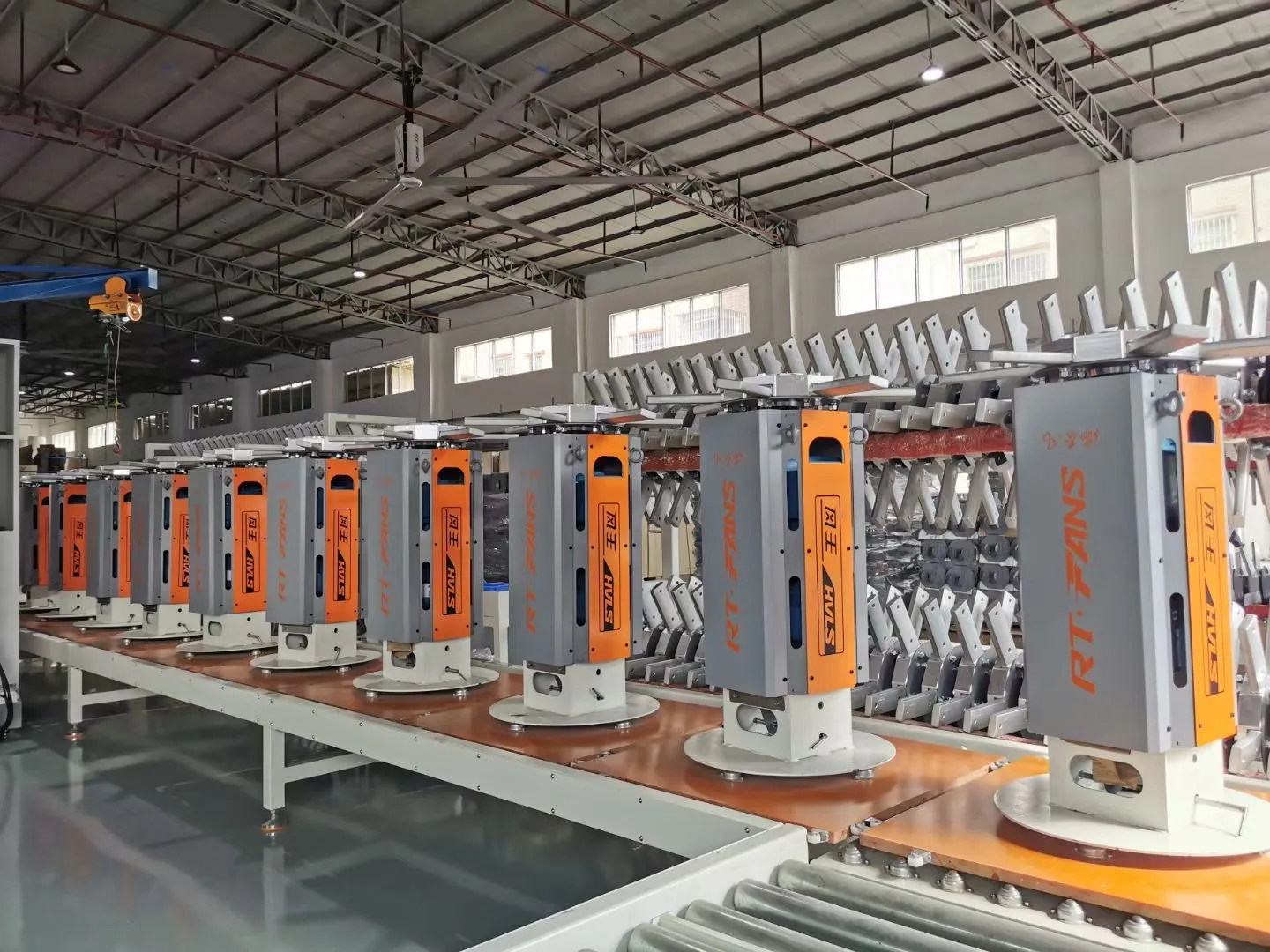
The most consequential choice in an HVLS fan is how it is driven. This comparison sets gear-drive and PMSM direct-drive designs side by side — how each produces low-speed torque (turning force), what the gearbox means for maintenance, and what the published RTFANS ratings actually show — so the decision rests on verifiable factors, not drive-type slogans.
What is the difference between PMSM and geared HVLS fans?
A gear-drive HVLS fan pairs an electric motor with a gearbox: the motor runs at higher speed and the gearbox reduces that to the low speed a large blade set needs. In the RTFANS range these are NORD gear drives, used on the King, Paragon and Virtue series. A PMSM fan uses a permanent-magnet synchronous motor sized to drive the hub directly at fan speed, with no gearbox in the path, and the Charm and Grace series are built this way. Both appear at 7.3 m in this range — the difference is the drive path, not the size of fan each can support.
How do PMSM and gear drive compare on key factors?
The table below compares the two drives on the factors buyers ask about most. Noise and weight figures are published ratings of each specific model, not properties of the drive type in general, so ratings should always be compared model to model.
| Factor | Gear drive (NORD) | PMSM direct drive |
|---|---|---|
| Drive principle | Motor plus gearbox cuts speed to a low output speed | Permanent-magnet motor drives the hub at fan speed |
| Gearbox | Yes — a service item in the drive path | None |
| RTFANS series | King RTF-CF-7EEX, Paragon RTF-FF-7EEX, Virtue RTF-SF-5EEX | Charm RTF-DF-7E-1EX, Grace RTF-YF-4EEX |
| Sizes in this range | 7.3 m (King, Paragon), 4.7 m (Virtue) | 7.3 m (Charm), 4.0 m (Grace) |
| Published noise ratings | 43 dBA (King), 42 dBA (Paragon), 40 dBA (Virtue) | 39 dBA (Charm), 38 dBA (Grace) |
| Rated input power | 1.5 kW (King), 1.1 kW (Paragon), 0.55 kW (Virtue) | 1.5 kW (Charm), 0.55 kW (Grace) |
| Service focus | Gearbox and gear motor are the scheduled-service items | No gearbox to service; focus shifts to motor, controller and connections |
| Weight in this range | 135 kg (King), 115 kg (Paragon), 55 kg (Virtue) | 120 kg (Charm), 38 kg (Grace) |
What are the strengths and limits of gear drive?
A gear drive’s strength is a mature, well-understood package: the geared motor is a standard industrial component, built as a matched set for a specific fan size, and familiar to maintenance teams. Its limitation is inherent — the gearbox is an additional mechanical stage that belongs in the service plan for the life of the fan.
What are the strengths and limits of PMSM direct drive?
A PMSM drive removes that stage entirely: no gearbox to service, and in this range the PMSM series carry the lower published noise ratings, a practical point where people work under the fan for long periods. Its limitation is that motor and controller work as a matched electronic package, so specification and later service depend on the manufacturer’s documentation and parts channel for that exact model.
Which drive suits which type of building?
In practice, gear-drive series are commonly shortlisted for heavy-duty industrial duty — factories, warehouses and logistics buildings where a conventional geared package is a known quantity. PMSM series are commonly shortlisted where low published noise figures and a gearbox-free drive are priorities, such as commercial and public spaces. These are tendencies, not rules: diameter, structure and ceiling height can outweigh drive preference, and the motor types guide explains the engineering in more depth. The HVLS fan calculator can organise your building inputs before you settle the drive choice.
What should I check before I choose a drive?
Whichever drive is chosen, confirm the same points against the specific model’s documentation: rated input power and supply voltage for your site, the published noise rating if the space is noise-sensitive, unit weight against a structural review of the mounting point, and what scheduled service the drive requires. Daily running energy follows one formula — input watts × operating hours ÷ 1000 = kWh — using that model’s verified rated power, not a range average.
What do buyers ask most about PMSM vs geared HVLS fans?
Is PMSM always quieter than gear drive?
Not by definition. In the current RTFANS range the PMSM series carry lower published noise ratings (39 and 38 dBA) than the gear-drive series (43, 42 and 40 dBA), but those are ratings of individual models, so compare the published figure for the exact model you are specifying.
Does a PMSM fan need less service?
It has no gearbox to service, which removes one scheduled item, but motor, controller, connections and blade set still require the manufacturer’s specified inspection regime.
Can both drive types serve the same building?
At 7.3 m, yes — the King and Paragon (gear) and the Charm (PMSM) are all 7.3 m series. Which one fits depends on noise sensitivity, service preference and structure, and the model selection guide puts all five series side by side.
Talk Through the Drive Choice
If you are weighing the two drives for a specific building, send the details through the layout request page and note the drive choice is the open question. The team will review it against your ceiling height and use pattern; the calculator covers the planning inputs meanwhile.